
Skoda Auto India, the Czech carmaker that has recently found success with its compact SUV Kylaq, says it remains committed to developing a fully localised electric vehicle (EV). The EV will be manufactured at its Chakan facility for both Indian market and exports.
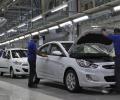
The country's leading automakers Maruti Suzuki and Hyundai Motor reported a decline in dispatches to dealers in March as shortage of electronic components impacted production. On the other hand, Tata Motors, Skoda and Kia India posted their highest ever monthly wholesales last month. Toyota Kirloskar Motor said its dispatches in March were the highest in the last five years while Mahindra & Mahindra also reported a robust increase in its passenger vehicle dispatches in March.

Tata Motors recorded its highest-ever monthly retail sales in November on the back of robust demand for its sports utility vehicles amid the festive period, according to a top company official. In an interaction with PTI, Tata Motors passenger vehicles managing director Shailesh Chandra said the automaker retailed around 53,000 units in November, which was 8 per cent higher as compared to October this year and 30 per cent up as compared to sales in November 2022. The company also witnessed strong sales performance in the 47 days long festive period this year with registrations of around 79,374 units, up 18 per cent over the same period of last year.

'We participate in the design/development of components and systems for electric vehicles, internal combustion engines, and hybrid vehicles.'

The growth momentum that started during the festival season is likely to sustain in the new year, reports Arindam Majumder.

From attractive EMIs to assured buyback guarantees, luxury carmakers have lined up a slew of offers to woo customers this festival season to address dwindling sales amid rising inventories.

'We need to be very vigilant as we are passing through some fraught times.'

During May, Maruti Suzuki's domestic car sales were up 2.59 per cent at 87,402 units as against 85,190 units in the same month last year.

Tesla needs to either sell the same models with reduced features to lower the cost for Indian market, or incur losses.
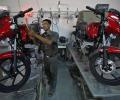
Bajaj Auto - the country's most valuable two-wheeler (2W) company by market capitalisation - met Street expectations in the January-March quarter (Q4) of 2024-25 (FY25) but still ended Friday as the worst performer on the Nifty 50, slipping 3.1 per cent.

Audi plans to focus the Indian market, including deepening market penetration and increasing sales volume.

The company is targeting countries like Germany, Italy, France, Spain, Portugal, and the UK which account for over 70 per cent of Europe's two-wheeler volumes.

Maruti Suzuki India (MSIL) said on Thursday its operations are unaffected by the global rare earth magnet shortage, but added that the situation is "uncertain and evolving". The firm said it is exploring multiple solutions to maintain continuity in operations and will notify stakeholders in case of material impact.

According to the monthly sales figures released by the Society of Automobile Manufacturers on Wednesday, motorcycle sales in the domestic market during September declined 18.40 per cent to 5,48,816 units compared to 6,72,570 units in the same month last year.

Why has the shift from ICE to electric slowed down despite initial enthusiasm?

Handbags, wrist watches, footwear and sportswear, priced above Rs 10 lakh will now attract 1 per cent Tax Collected at Source (TCS), as per a notification issued by the Income Tax department. TCS at 1 per cent rate is currently being levied on motor vehicles costing above Rs 10 lakh effective January 1, 2025.

The gap in demand for electric vehicles between large and mid-sized cities in the country is shrinking and the Tier-II 2 cities are likely to emerge as the next big demand centre for EVs, a report said on Tuesday. An analysis of the electric two-wheeler and car sales by strategic research provider BloombergNEF (BNEF) from 207 cities across 10 states also suggests that the electric two-wheeler sales in some tier 2 markets have surpassed metropolitans while within tier 2 cities, state capitals generally leading the growth in electric car sales.

For FY26, the company has adopted a cautious outlook, anticipating domestic growth to broadly track the industry's low single-digit estimated growth amid ongoing economic headwinds.

High frequency indicators, like vehicles sales, air traffic, steel consumption and GST E-way bills, point towards a sequential pickup in momentum of economic activity during the second half of the fiscal 2024-25 and sustain moving forward, RBI Bulletin said on Wednesday. However, a strong dollar, driven by US economic resilience and trade policy pivots, could exacerbate capital outflows from emerging economies, push risk premiums higher, and intensify external vulnerabilities, said an article on 'State of the Economy' published in RBI's February bulletin.

Ola Electric on Wednesday said it has successfully completed a company-wide initiative to reduce cost and improve customer experience.

JV to export e-carts, aim for 10% global market share, $1 bn turnover and innovation in driverless tech.
Passenger vehicle retail sales in India witnessed an 11 per cent year-on-year decline in December as semiconductor shortage continued to impact the segment, automobile dealers' body FADA said on Wednesday. The passenger vehicle (PV) retail sales last month fell 10.91 per cent to 2,44,639 units from 2,74,605 units in December 2020. "The month of December is usually seen as a high sales month where OEMs continue to offer best discounts to clear the inventory due to change of the year.

Automotive (auto) major Tata Motors posted a 51 per cent drop in consolidated net profit for the January-March quarter (Q4) of 2024-25 (FY25), to Rs 8,470 crore, due to a deferred tax asset of almost Rs 9,000 crore in the corresponding quarter of the previous financial year and an exceptional item of Rs 566 crore during the quarter. Revenue was up just 0.5 per cent year-on-year (Y-o-Y) at Rs 1.18 trillion for Q4FY25.
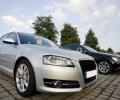
While two-wheeler sales are down 15 per cent year-on-year, passenger vehicles sales are lower by 5-7 per cent.
The domestic passenger car sales fell by 6.59 per cent in October to 98,900 units from 1,05,877 units in the same month last year.

The state is also the biggest market for TVS, another incumbent player, and together with Bajaj Auto, they accounted for 88 per cent of Maharashtra's total electric scooter sales last month. As many as 8,417 units were sold in Maharashtra in September. Bajaj Auto's contribution was 4,048 vehicles and that of TVS was 3,389, according to model- and state-wise data from the Society of Indian Automobile Manufacturers (Siam).
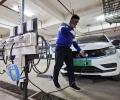
Even as the government debates whether to continue the FAME-II subsidy for electric vehicles (EVs), the share of such vehicles in overall sales is decelerating, after witnessing a heady growth in the first few years. The penetration of EVs - electric two-wheelers, passenger vehicles, three- wheelers and other segments collectively - in the first 10 months of FY24 has been pegged at 4.3 per cent, compared to 3.7 per cent in FY23, according to credit rating agency ICRA.

In an age where personal data is a valuable commodity, investing in cyber insurance is not just a prudent choice; it is becoming a necessity for individuals and families alike, says T A Ramalingam.

Leading automakers Maruti Suzuki, Hyundai and Tata Motors on Thursday reported robust sales in March as a shift towards personal mobility and pent up demand continued to help companies push dispatches to their respective retail partners. Toyota Kirloskar Motor, Honda Cars and Mahindra and Mahindra (M&M) also reported strong sales last month as compared to the year-ago period, when dispatches were adversely impacted due to the impending transition to BSVI from April 2020 and the nationwide lockdown to contain the coronavirus pandemic. The country's largest carmaker Maruti Suzuki India said its domestic sales stood at 1,49,518 units last month. The auto major had reported sales of 76,976 units in March 2020.

Passenger vehicle wholesales in India declined by 66 per cent to 88,045 units in May as compared to April this year as lockdowns across various states impacted dispatches to dealers, auto industry body SIAM said on Friday. Passenger vehicle wholesales in April stood at 261,633 units. As per the latest data by the Society of Indian Automobile Manufacturers (SIAM), two-wheeler dispatches to dealers dropped by 65 per cent to 3,52,717 units, compared to 9,95,097 units in April.

Major automakers, including Maruti Suzuki, Hyundai, Tata Motors, Mahindra & Mahindra, Kia, Toyota and Honda, on Thursday reported healthy growth in passenger vehicles sales in June, recovering from the disruptions induced by the second wave of COVID-19. The country's largest carmaker Maruti Suzuki India (MSI) posted total sales of 1,47,368 units in June, up from 46,555 units in May. Its domestic dispatches to dealers last month stood at 130,348 units, up from 35,293 units in May, as easing of COVID-related restrictions helped the auto major to dispatch more units to dealerships.
Domestic passenger vehicle retail sales declined eight per cent in February as the companies continued to suffer production loss due to chip shortage, automobile dealers' body FADA said on Friday. The passenger vehicle (PV) sales dropped to 2,38,096 units last month, down 7.84 per cent from 2,58,337 units in February 2021. "Even though the passenger vehicle (PV) segment saw some launches and slight respite in supply due to better production, it was not enough to meet customer demand. "Vehicle waiting period thus remains similar to what it was in the past few months," FADA president Vinkesh Gulati stated.

Retail sales of passenger vehicles grew last month but the sales of two-wheeler and commercial vehicles remained low compared to the pre-COVID month of May 2019, according to automobile dealers' body FADA. On Monday, FADA said that overall auto retails stood at 16,46,773 units in May, down from 18,22,900 units in May 2019. "May 2022 retails when compared to May 2019 reveal that sales are still not on a growth trajectory as overall retails were down by 10 per cent.

The company had sold 51,160 vehicles in the same month last year.

'The government is actively engaging with EU to ensure that concerns of Indian companies and hard-to-abate sectors are adequately addressed under CBAM'
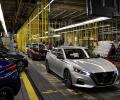
Automobile retail sales in India rose by 9 per cent in August aided by sales growth in all segments, including passenger vehicles and two wheelers, dealers' body FADA said on Tuesday. The total retail sales across segments rose to 18,18,647 units last month, up 9 per cent, from 16,74,162 units in August 2022. Passenger vehicle registrations increased by 7 per cent to 315,153 units last month from 295,842 units in August 2022.
Riding on the back of Indica, which crossed the sales mark of 9,000 units, Tata Motors on Friday reported a 31.3 per cent increase in its October sales at 35,283 vehicles as against 26,862 units in the same month last fiscal.

Domestic passenger vehicle dispatches witnessed a 13 per cent year-on-year rise in April as demand remained robust across segments, industry body Siam said on Friday. The total passenger vehicle dispatches from companies to dealers rose to 331,278 units last month compared to 293,303 units in April 2022. Market leader Maruti Suzuki India dispatched 137,320 units to dealers last month against 121,995 units in April last year.

Passenger vehicle majors like Hyundai, Tata Motors, M&M, Toyota Kirloskar and Honda on Wednesday reported growth in domestic sales in August riding on festive sentiments, although market leader Maruti Suzuki posted a decline amid a semiconductor shortage affecting the industry. The country's largest carmaker Maruti Suzuki India Ltd (MSIL) reported domestic sales at 110,080 units, as compared to 116,704 units in the same month last year, down 6 per cent. "Sales volume of the company in August 2021 was affected due to electronic components shortage.

According to experts, even if an additional 5 per cent of people opt to buy new vehicles, it may bring a huge boost to the sector.
